How WFI works
Sensors watch your tanks and pumps, WFI names each fault, a partner fixes it, and every repair is proven.
ForFacility managerOwnerTechnicianInspector
The problem
Most leaks happen where nobody looks: in tanks, float valves and the hidden pipe between the meter and the tank. They are usually found late, on the bill or by an inspector.
How WFI helps
WFI adds small sensors, reads them every 15 minutes and names a fault as soon as the readings show it. A licensed partner firm fixes it, and the readings prove the repair.
Step by step
- 1
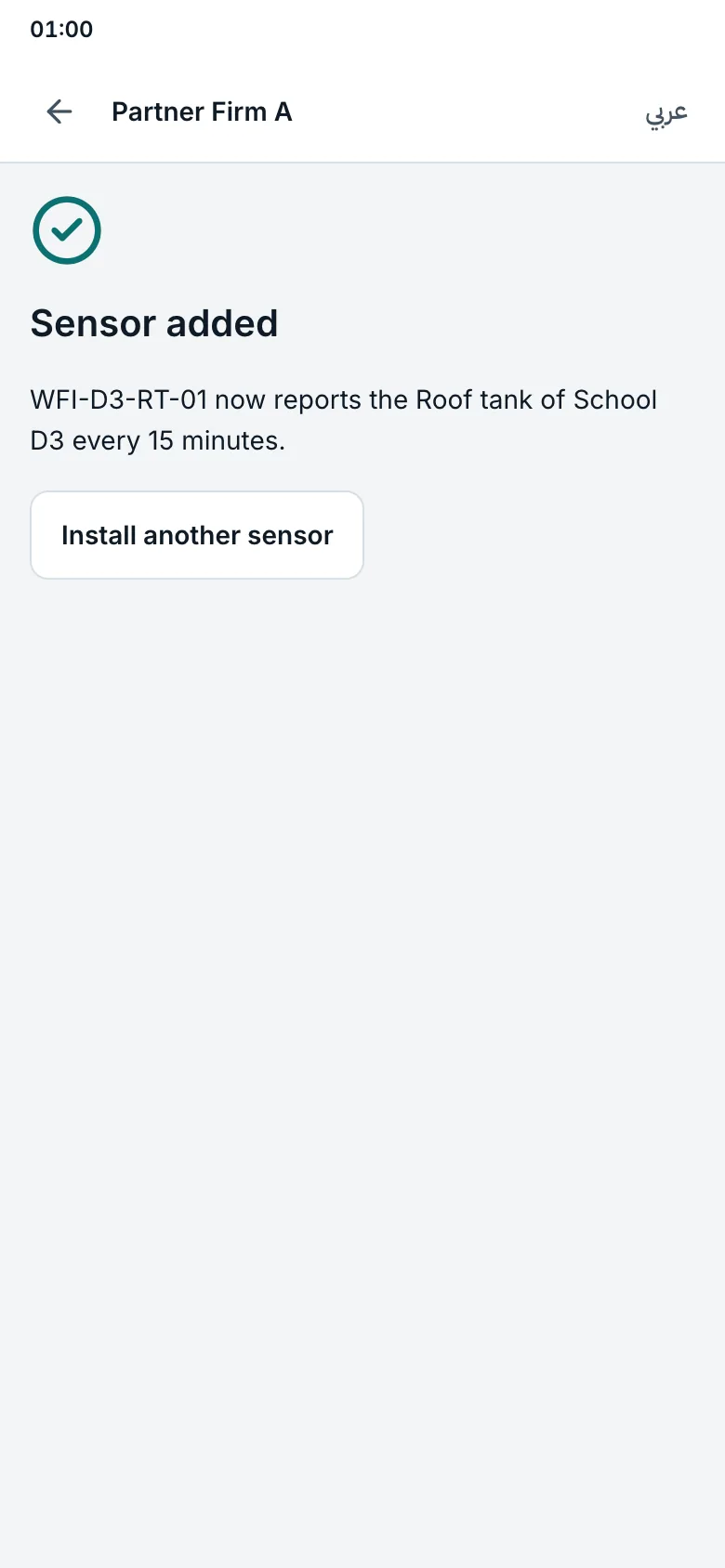
Fit the sensors
A partner technician fits level sensors on the tanks and a clamp on the pump cable. No pipe is cut.
- 2
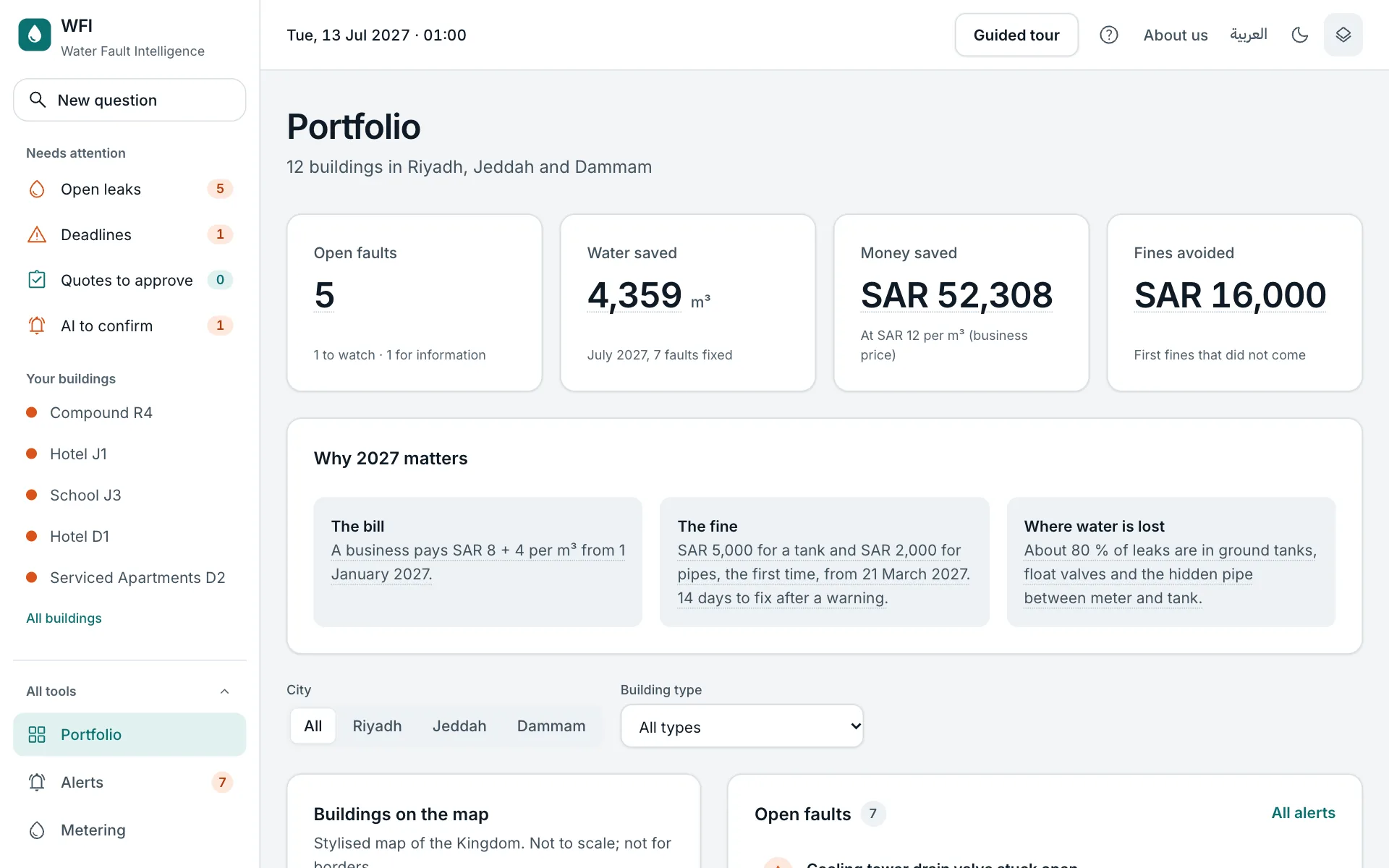
Watch every building
The portfolio shows the open faults, the water saved and the money saved for all your buildings.
- 3
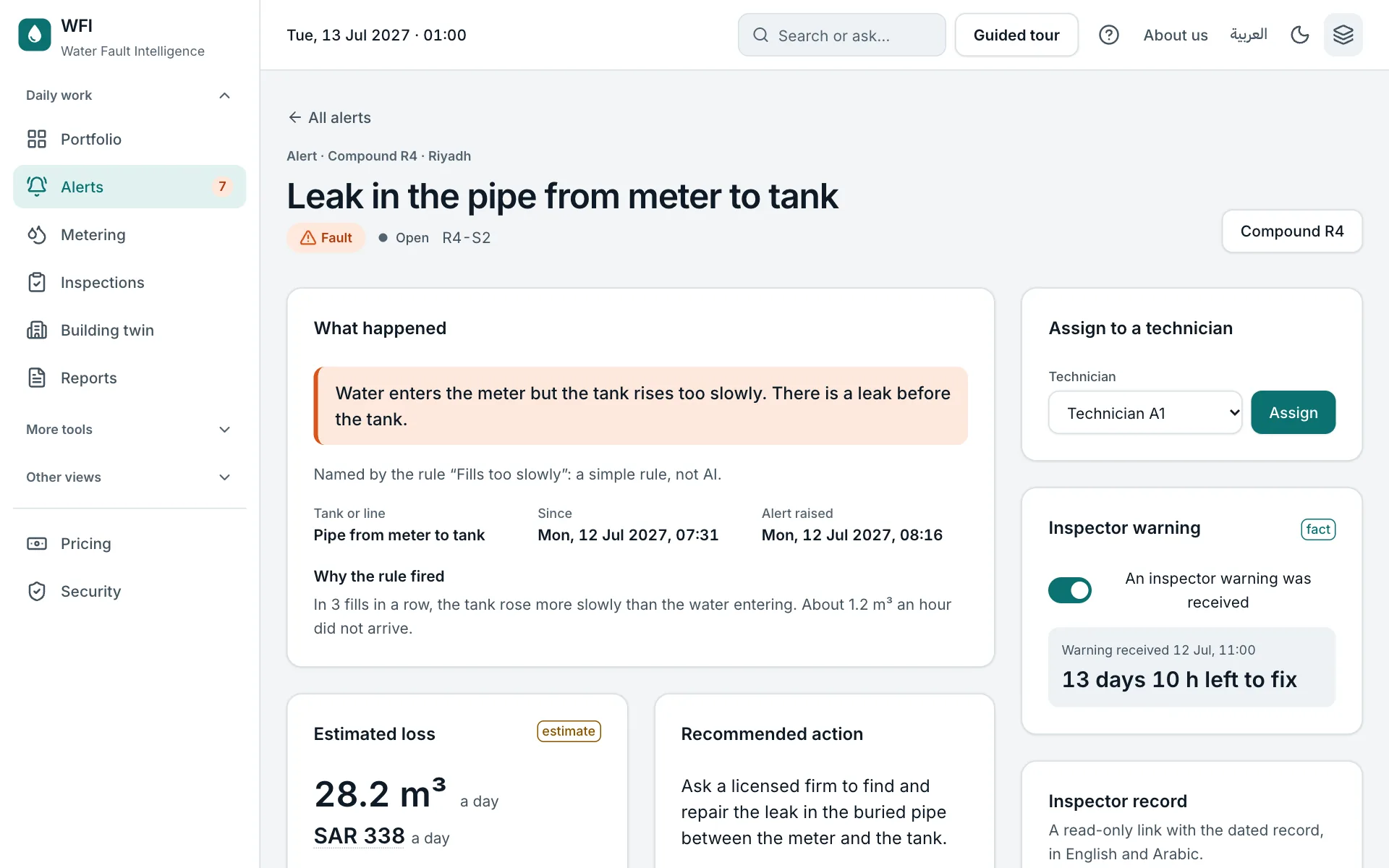
Get a named fault
An alert says what is wrong, where, since when and what it costs a day.
- 4
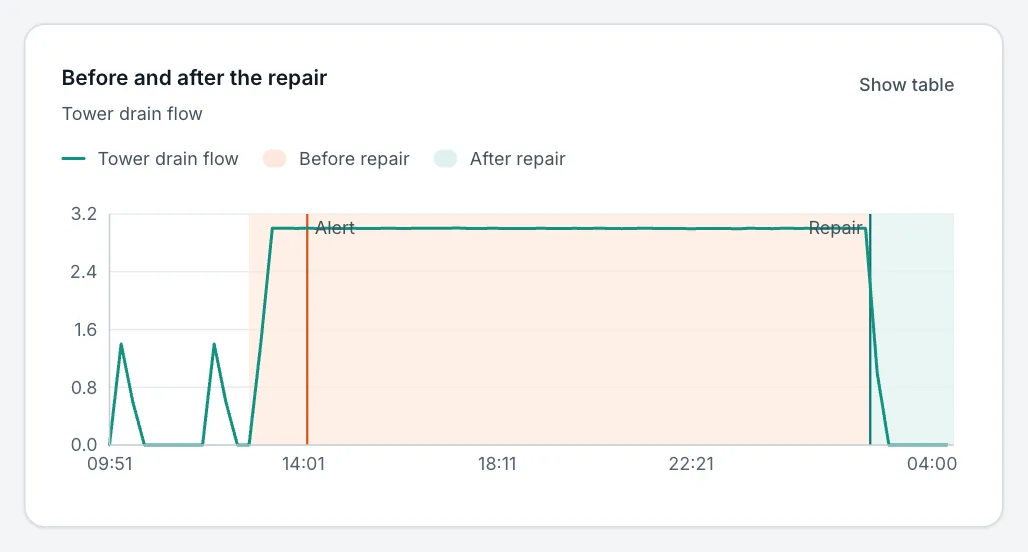
Fix and prove
You approve the firm's quote, then each repair step is dated on the technician's phone. When the readings are normal again, the alert closes with a before and after chart.
- 5
See the savings
Reports show the water and money saved for each building, month to date.
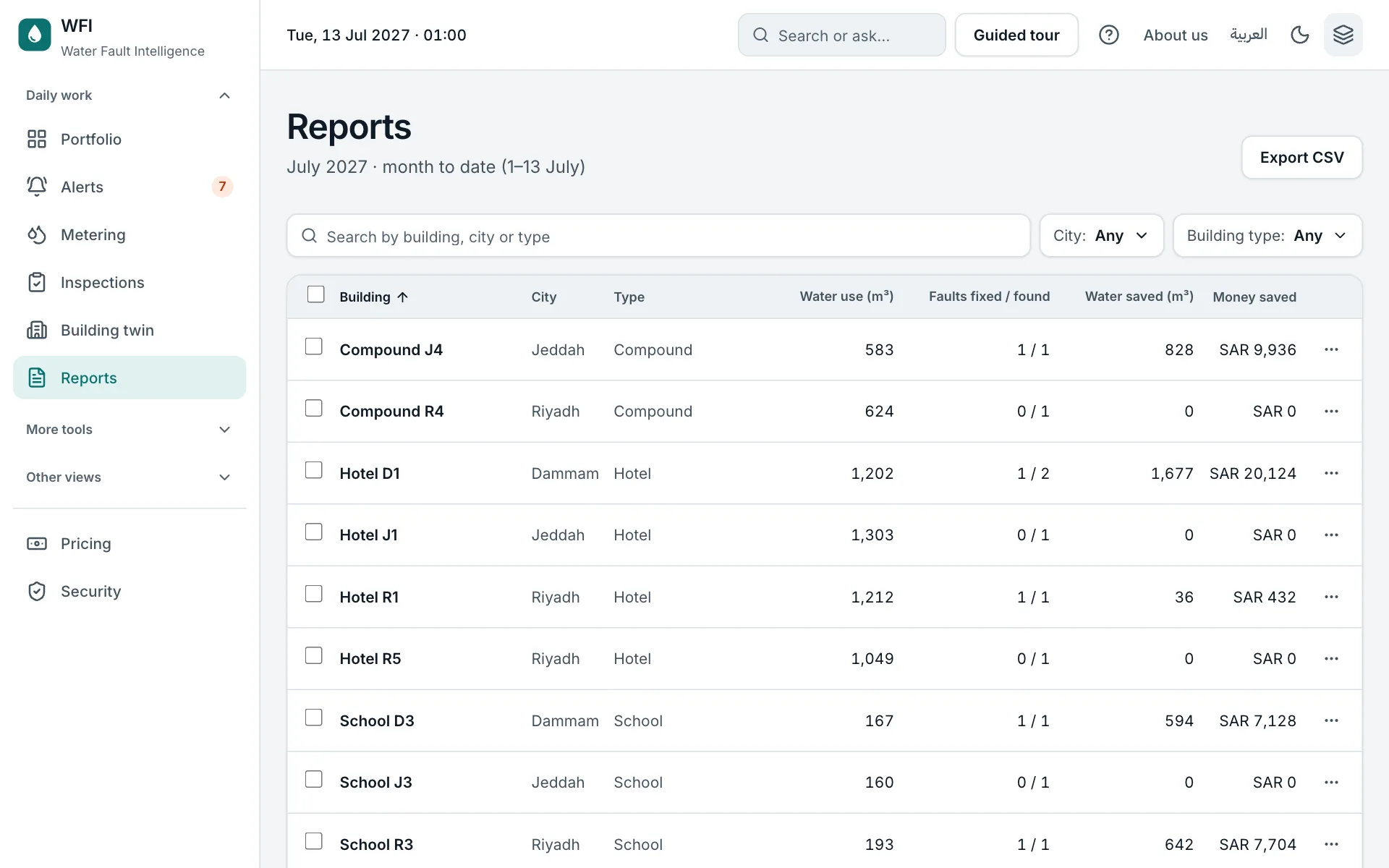
Try it yourself on the real screen.
Open PortfolioSources
- F2 About 80 % of the leaks the national water-efficiency centre finds are in ground tanks, their float valves and the hidden pipe between meter and tank. (Centre's chief executive, Al-Eqtisadiah / Arab News, 6 Jul 2026)